Drain cleaning
Floor Drain Cleaning: Basement & Laundry Drains in Lewisberry
Basement floor drains and laundry standpipes fail in their own ways: lint, dried-out traps and backups from the main line. Here is what to look for.
Get Lewisberry help today(555) 010-0100
- Lint and soap clog laundry standpipes
- Dry traps let sewer smell in
- A floor drain backing up may point to the main line
Floor drain cleaning in Lewisberry mostly happens in basements, where the floor drain and the washer standpipe sit at the lowest point of the house. A laundry drain that overflows and a floor drain that smells or backs up are two different problems, and both are common. Call and describe which one you have.
Call for a same-day slot(555) 010-0100
Laundry drain backing up: lint and standpipe overflows
A washer pumps water out fast. A standpipe with a lint-and-soap coating can not take it, so the pipe overflows during the drain cycle. Lint is soft and builds up quickly, especially when the washer has no lint trap on its hose.
Basement floor drain clog and backups
A floor drain connects to the main line. When water comes up in it, it is often because the main line is partly blocked. If this only happens when the washer drains, that is a strong clue. Compare the signs under main drain line cleaning.
Floor drain cleaning in Lewisberry: dried-out traps and smells
A floor drain trap holds a little water that blocks sewer air. If the drain is rarely used, the water evaporates and a smell rises. Pouring a little water in often stops it, though a smell that stays may mean something else.
Low-lying basements and storm-season backups
In low basements, heavy rain can overload the connection and push water up the lowest drain. No one can promise how a basement will behave in a storm, and we make no flood claims. If it happens, the technician can check whether the line itself is clear.
Backwater valves explained generally
A backwater valve is a device that lets water leave the house but closes against flow coming back. Whether one fits your home is a question for a plumber, and the technician can describe the idea during a visit.
While you wait
- Stop using the washer and other fixtures if the floor drain is backing up.
- Move valuables off the basement floor.
- Do not pour chemical drain cleaner into a floor drain.
- Keep children and pets away from backed-up water.
Why the basement shows problems first
A basement floor drain and a washer standpipe are the two lowest openings in most houses, and they connect to the drain line close to where it leaves the building. That makes them early warning signs. When the main line slows, they are the first to show it. When only the washer is the problem, the standpipe overflows and the floor drain stays quiet.
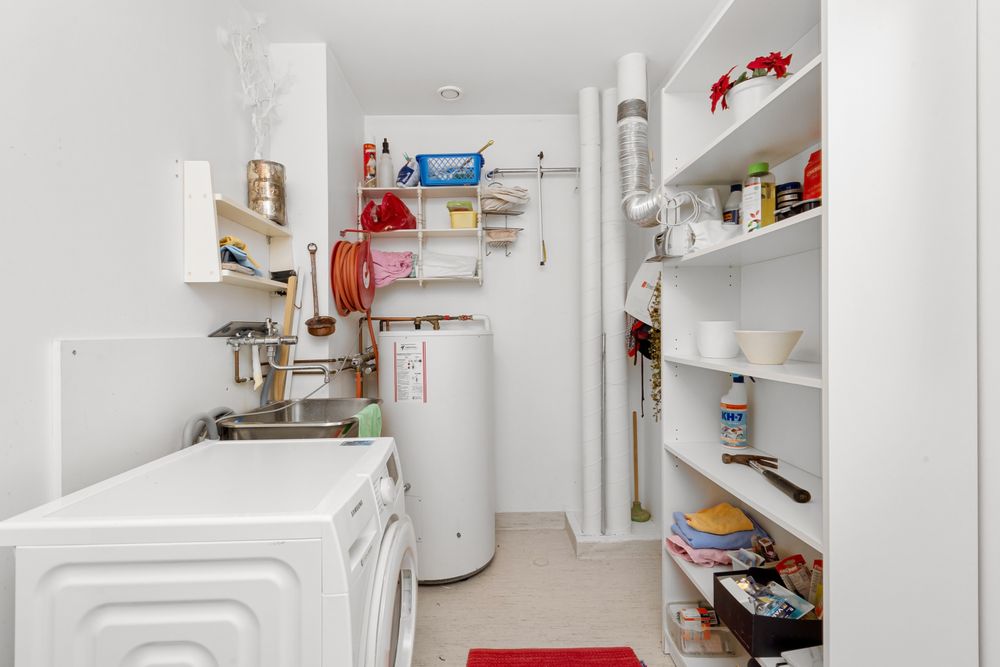
What a basement drain visit looks like
- You describe which opening misbehaves and when: during the wash, during rain, or all the time.
- The technician checks the standpipe and its trap for lint and soap.
- The floor drain is cleared, either through the grate or from a nearby cleanout.
- Water runs from the washer and from upstairs fixtures to see whether the drain keeps up.
- You hear whether the cause was local or something further along the line.
Washing machine drain overflow: what you can check yourself
If the washer overflows during the drain cycle, look at whether the drain hose is pushed too far into the standpipe, which can restrict airflow, and whether lint has collected around the opening. Both are things you can see without taking anything apart. If the standpipe still fills, the clog is below, and a technician is the next step. Do not pour chemical cleaner into the standpipe.
If it is only a smell
A sewer smell from a rarely used floor drain is often a dry trap. A little water usually fixes it. If the smell comes back quickly, or comes with slow draining, tell the dispatcher, since something beyond the trap may be involved.
How a laundry standpipe works
The standpipe is a vertical pipe, usually behind or beside the washer, with a trap below. The washer hose sits loosely in the top so air can escape as water drains. When lint and soap narrow the pipe, water arrives faster than it leaves and spills over the top. Cleaning the standpipe and trap often fixes it. If the problem is below the trap, in the line the standpipe joins, a longer cable is needed.
Where lint comes from
A washer sheds fibers into its water every cycle. A mesh filter on the drain hose can catch some of it, and it is worth checking. The rest travels to the standpipe, where it binds with detergent and fabric softener to form a soft plug. Households with pets or with a lot of towels and fleece see more of it. None of this is unusual.
Basement floor drains: grates and what is under them
A floor drain has a grate on top, and under it a strainer and a trap. Debris from the floor can collect in the strainer, and the trap can dry out. The line below connects to the main drain, so a floor drain that backs up is sometimes the first sign of a bigger blockage. Clearing the drain through the grate is usually possible, and if water comes right back, the technician can check the line beyond.
Backwater valves and why they come up
If a basement has had a backup more than once, a backwater valve may come up in conversation. It is a device in the drain line that closes if water tries to flow back toward the house. Whether one is a good fit depends on the house and the line, and installation is a plumber's job, not part of drain cleaning. A technician can explain how it works and tell you what to ask.
Habits that help
Clean the washer's lint filter, if it has one, and check the standpipe from time to time for lint around the opening. Pour a little water into rarely used floor drains so the trap stays full. Keep the grate clear of debris. These habits reduce the chance of trouble, and they do not remove it, since the line behind the drain is out of sight and out of reach for most households.
Basements in Lewisberry homes
Subdivision basements on the Fairview side usually have a laundry area and a floor drain in the same room. See drain cleaning in Fairview Township (Lewisberry Side). For rural homes with septic, covered under drain cleaning in Warrington Township, floor and laundry drains are cleared on the house side only. If it is after hours, emergency drain cleaning describes what to do. Kitchen clogs can show up alongside, and kitchen drain cleaning explains them.
Questions
Common questions
The drain is partly blocked with lint and soap, so it can not take the washer's pump-out volume. Clearing the standpipe and trap usually helps.
The trap may have dried out, letting sewer air up. Adding water sometimes stops it. If it returns, a technician can check the line.
It is the lowest opening in the house, so a partly blocked main line shows there first.
Same-day dispatch is available where possible. Call and describe what the drain is doing.
Often, especially if it happens when other fixtures drain. A technician can confirm.
A device on the line that lets water out but shuts against flow coming back in. Ask a plumber whether it fits your home.
Yes. Lint is soft but dense, and it binds with soap into a plug.
Keep debris and chemicals out. A little water can refill a dry trap.
Water in the basement drain?
For floor drain cleaning in Lewisberry, call and describe what the drain is doing. We will connect you with a local pro.
Call now, fix it today(555) 010-0100